What Is Dual Pricing and How Does It Work for Small Businesses?
Credit card processing fees are a routine cost of doing business, but they can quickly add up. For small businesses operating on tight margins, those fees can have a noticeable impact on profitability.
Dual pricing offers another approach. Instead of building credit card processing costs into every transaction, a dual pricing system allows businesses to clearly display separate cash and card prices, giving customers the ability to choose how they want to pay.
What Is Dual Pricing?
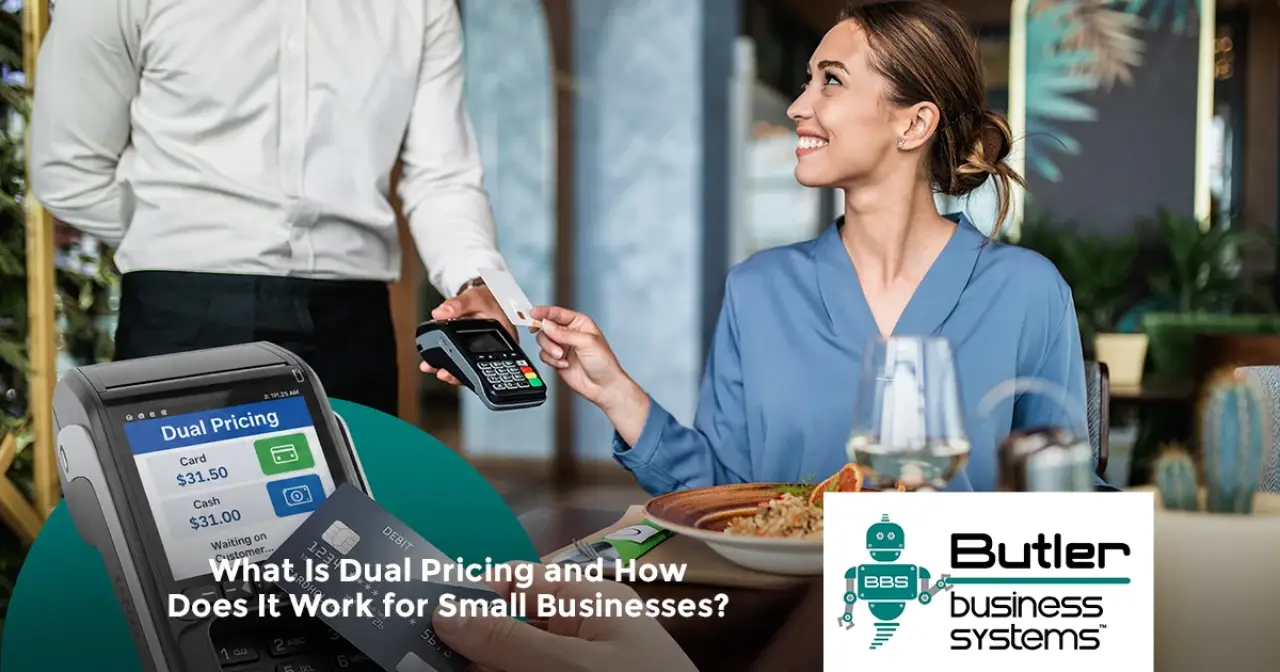
Dual pricing is a payment model that displays two prices for a product or service: one for customers paying with cash and another for customers paying with a credit card.
The card price accounts for the cost associated with processing the credit card transaction, while customers who pay with cash receive the lower cash price.
For example, if an item has a cash price of $10.00, the POS system can also display the applicable card price. Both options are presented clearly so customers know the cost before choosing their payment method.
How Does Dual Pricing Work?
With the right POS system, dual pricing can be incorporated directly into the checkout process. Rather than requiring employees to manually calculate different prices, the system automatically applies the appropriate pricing based on how the customer pays.
At Butler Business Systems, our built-in dual pricing tools can display both cash and card pricing on receipts and, for businesses like meat markets, directly on scale labels. The 4% processing fee applies only to credit transactions, helping businesses maintain a straightforward and transparent pricing structure.
This allows employees to focus on serving customers rather than calculating fees or adjusting prices at the register.
What Are the Benefits of Dual Pricing for Small Businesses?
One of the biggest advantages of dual pricing is greater control over credit card processing costs. Instead of absorbing those costs on every credit transaction, businesses can maintain more predictable margins.
Dual pricing can also provide:
- Clearer pricing: Customers can see their cash and card payment options before completing a purchase.
- More predictable costs: Businesses can better account for the expense of accepting credit cards.
- Customer choice: Shoppers can decide whether they prefer the convenience of paying by card or the lower cash price.
- Simplified checkout: An integrated POS system automatically manages the pricing structure, reducing manual calculations for employees.
For businesses processing a large number of transactions, even small processing costs can add up over time. A properly configured dual pricing system can help make those expenses easier to manage.
What Types of Businesses Can Use Dual Pricing?
Dual pricing can work for many types of small businesses, particularly those with frequent in-person transactions.
Retail stores, meat markets and butcher shops, convenience stores, specialty markets, restaurants, and other local merchants may benefit from incorporating dual pricing into their payment process.
The right setup will depend on the business, its POS system, and how products and prices are displayed to customers.
Make Dual Pricing Easier With the Right POS System
Dual pricing should make payment processing easier, not create more work at the register. A POS system with integrated dual pricing tools can automatically manage cash and card prices while keeping pricing clear for customers and employees.
Since 1998, Butler Business Systems has helped local businesses find technology that fits the way they operate. We provide POS systems, on-site installation, hands-on training, and local support for businesses throughout Western Pennsylvania, Eastern Ohio, and Northern West Virginia.
Interested in learning whether dual pricing makes sense for your business? Contact Butler Business Systems to learn more about our POS and payment solutions.